We remain fully operational. Our teams are working around the clock to ensure your deliveries continue safely.

DOWNLOAD THE APP


Copyright © 2025 Desertcart Holdings Limited
DOWNLOAD THE APP
Buy anything from 5,000+ international stores. One checkout price. No surprise fees. Join 2M+ shoppers on Desertcart.
Desertcart purchases this item on your behalf and handles shipping, customs, and support to Mauritius.
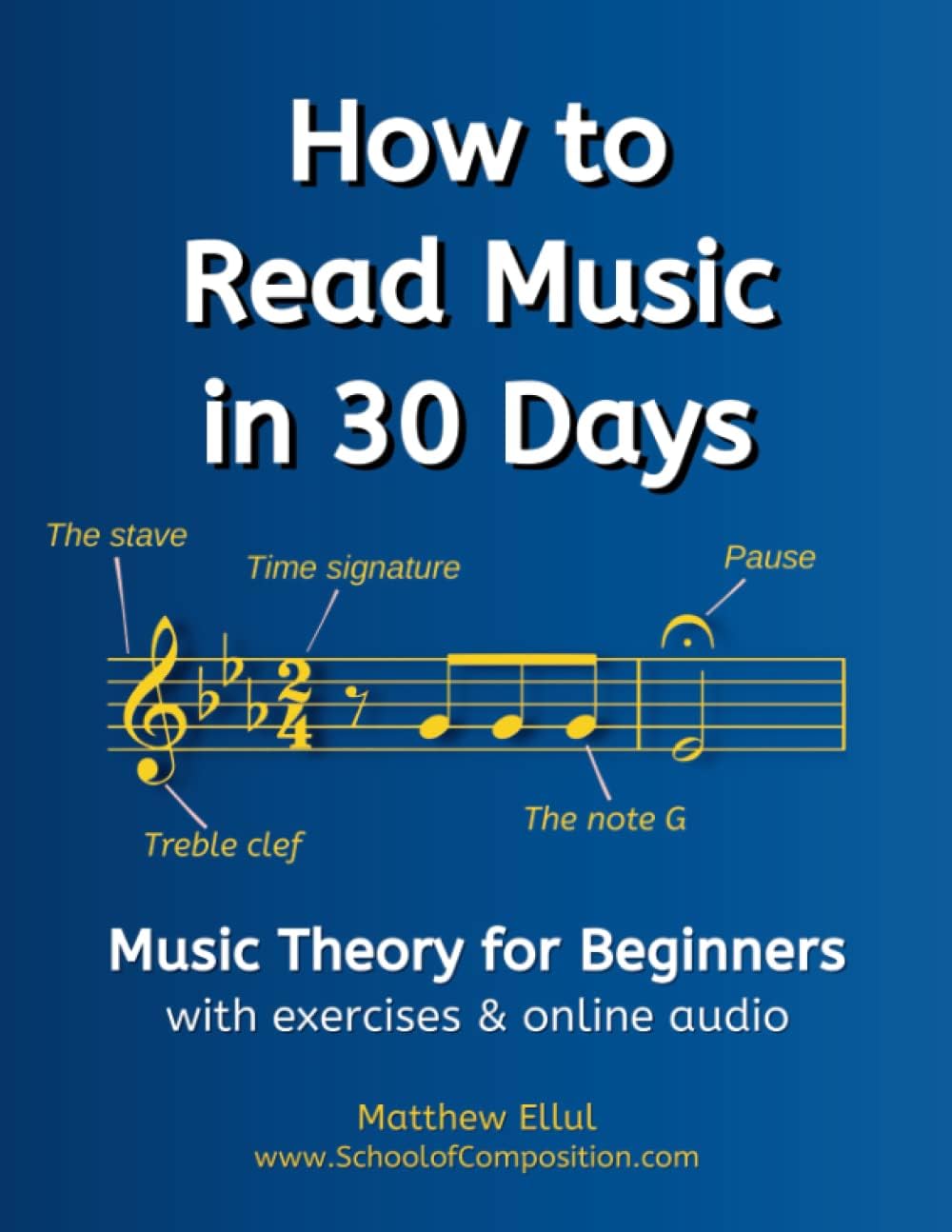
Buy How to Read Music in 30 Days: Music Theory for Beginners - with exercises & online audio: 1 (Practical Musical Theory) by Ellul, Matthew (ISBN: 9781977904874) from desertcart's Book Store. Free UK delivery on eligible orders. Review: Excellent book for beginners or re-learners - I love this book. I'm learning to read music again after 40 years but even if you're a complete beginner this book is the one to use. Even though it's American the UK terms are also given where they're different. Don't be put off by the "30 days", it's just split up into 30 small chunks of information which you can learn at your leisure. Each chapter (day) explains one aspect of musical theory, each one building on the previous one. The writing is clear, precise and very understandable and you don't feel as if you are being taught like a child. This is a perfect book for adults. Each chapter is summarised at the end with Exercise questions that make you think. The answers aren't in the book itself, you need to go to the website to find them, details of this are in the book. The most important aspect of this book for me are the "Listening Experiences" from Day 2 onwards, which are also on the website. These are short audio extracts of music by different composers to illustrate the points in the book. Exercises in the book, with questions to answer, lead you to the audio extracts. I found these invaluable to really bring the information alive. This book covers all aspects of musical notation and is the only one you'll need in order to read music, although there is a follow up book if you want to go deeper into composing your own music. I have looked at several different books on learning to read music and this one is by far the best. Review: Hands down the best introduction music theory book I have come across - This has to be hands down the best introduction music theory book I have come across. I picked up this book after I heard the author interviewed on a podcast. I wanted to improve my composition for music exams and it seemed like that was where the author was coming from but the book and accompanying free course have done so much more. To help embed the theory you are learning the author has included score reading challenges (the scores can all be found for free online). This has really improved my active listening and ability to hear subtleties in music. The book used in this way creates a solid practice link between music theory and ear training. This part of the book/course is over two hours of active listening. Likewise playing music will improve. The way the material is explained I could make a solid connection between theory and my performance. One specific example is the discussion on syncopation. At the moment I’m working on Maple Leaf Rag and the explanation gave me a light bulb moment. At the end of every chapter is a short quiz and at the very end is a course quiz. This helps to embed what you have learned before you move on further grounding your theory . Because the book is self published the the need to pay for full publisher’s production costs were avoided and consequently the book is great value. I would imagine if it was produced by a publisher the cost would be at least twice what it is especially with the course that accompanies the book. Being self published there are some minor typos but nothing that affects the accuracy of the information. They are mostly of the kind where the text says ’10 examples’ and 8 examples are provided. For me this book is a solid 5 stars and I was surprised to see people give it one star. I had a quick look to see why their experience differed to mine. Some people criticised the lack of author response to download issues. This may have been a past problem that has been resolved. The course to accompany the book has an active discussion board where you can post questions as you go through the book’s material. I always got a reply within 24 hours. One person complained that the examples were of for a keyboard and not other instruments. I’m not a piano player (stringed instruments), however the linear pitch layout of the piano and white natural notes with black accented notes makes it a very clear tool for explanation that every musician can benefit from. It would be impossible to include examples for all instruments and only one chapter is piano specific when piano pedal marks were discussed. In summary great a value and engaging book with a well thought out and supportive course which will help me with composition, appreciation and performance. This will definitely improve my enjoyment of listening to and playing music and isn’t that what it’s all about?


| Best Sellers Rank | 10,570 in Books ( See Top 100 in Books ) 3 in Music Appreciation 5 in Musical Theory & Composition Exercises 21 in Musical Theory |
| Book 1 of 2 | Practical Musical Theory |
| Customer reviews | 4.6 4.6 out of 5 stars (3,235) |
| Dimensions | 21.59 x 0.99 x 27.94 cm |
| ISBN-10 | 1977904874 |
| ISBN-13 | 978-1977904874 |
| Item weight | 413 g |
| Language | English |
| Print length | 171 pages |
| Publication date | 24 Oct. 2017 |
| Publisher | CreateSpace Independent Publishing Platform |
M**E
Excellent book for beginners or re-learners
I love this book. I'm learning to read music again after 40 years but even if you're a complete beginner this book is the one to use. Even though it's American the UK terms are also given where they're different. Don't be put off by the "30 days", it's just split up into 30 small chunks of information which you can learn at your leisure. Each chapter (day) explains one aspect of musical theory, each one building on the previous one. The writing is clear, precise and very understandable and you don't feel as if you are being taught like a child. This is a perfect book for adults. Each chapter is summarised at the end with Exercise questions that make you think. The answers aren't in the book itself, you need to go to the website to find them, details of this are in the book. The most important aspect of this book for me are the "Listening Experiences" from Day 2 onwards, which are also on the website. These are short audio extracts of music by different composers to illustrate the points in the book. Exercises in the book, with questions to answer, lead you to the audio extracts. I found these invaluable to really bring the information alive. This book covers all aspects of musical notation and is the only one you'll need in order to read music, although there is a follow up book if you want to go deeper into composing your own music. I have looked at several different books on learning to read music and this one is by far the best.
H**E
Hands down the best introduction music theory book I have come across
This has to be hands down the best introduction music theory book I have come across. I picked up this book after I heard the author interviewed on a podcast. I wanted to improve my composition for music exams and it seemed like that was where the author was coming from but the book and accompanying free course have done so much more. To help embed the theory you are learning the author has included score reading challenges (the scores can all be found for free online). This has really improved my active listening and ability to hear subtleties in music. The book used in this way creates a solid practice link between music theory and ear training. This part of the book/course is over two hours of active listening. Likewise playing music will improve. The way the material is explained I could make a solid connection between theory and my performance. One specific example is the discussion on syncopation. At the moment I’m working on Maple Leaf Rag and the explanation gave me a light bulb moment. At the end of every chapter is a short quiz and at the very end is a course quiz. This helps to embed what you have learned before you move on further grounding your theory . Because the book is self published the the need to pay for full publisher’s production costs were avoided and consequently the book is great value. I would imagine if it was produced by a publisher the cost would be at least twice what it is especially with the course that accompanies the book. Being self published there are some minor typos but nothing that affects the accuracy of the information. They are mostly of the kind where the text says ’10 examples’ and 8 examples are provided. For me this book is a solid 5 stars and I was surprised to see people give it one star. I had a quick look to see why their experience differed to mine. Some people criticised the lack of author response to download issues. This may have been a past problem that has been resolved. The course to accompany the book has an active discussion board where you can post questions as you go through the book’s material. I always got a reply within 24 hours. One person complained that the examples were of for a keyboard and not other instruments. I’m not a piano player (stringed instruments), however the linear pitch layout of the piano and white natural notes with black accented notes makes it a very clear tool for explanation that every musician can benefit from. It would be impossible to include examples for all instruments and only one chapter is piano specific when piano pedal marks were discussed. In summary great a value and engaging book with a well thought out and supportive course which will help me with composition, appreciation and performance. This will definitely improve my enjoyment of listening to and playing music and isn’t that what it’s all about?
C**.
Suitable for all musicians who want to understand music theory
Very well constructed book. It's laid out in a way that covers the basics and graduates to more complicated aspects of music in a measured and logical way. Allows the student to make steady progress throughout their journey.
D**N
Excellent theory book
As an older person learning the piano I was looking forward to getting this book after reading the reviews. I wanted to learn more about music theory and understand time signatures, beams etc and I’ve not been disappointed This book has it all including exercises to try. As it says in the title it’s separated in to daily learnings which I’ve found great. Each section is well explained and has exercises after to have a go at what has just been covered. The online link to follow along with the book is excellent. There is a forum where you can ask questions. Be great if everyone who bought the book logged in here. Don’t stress on the maths comments. It’s explained so well you’ll soon get it. Notes are covered in American and English so I found it very easy to follow. All in all I can’t recommend this book more highly. amazing value for money I’ve already bought book 2 ready for when I’ve completed this one
B**M
EXCELLENT
Returning to the piano after years of not playing. This book is concise, easy to understand, gives the British and American note names, and despite having a couple of piano grades I am learning new things that were never explained to me during music lessons. There are exercises to check your understanding after each unit, audio clips to listen to, I cannot fault this book. I will definitely be buying his second book.
J**N
Extremely useful for beginners or returning musicians. A must buy book.
I had not played an instrument for many years and this book was useful in learning how to re-read music, with this book and continued practice I am much better than before and I will refer to the book on occasions and refreshers of terminology etc. The basic techniques from this book are strongly recommended and it most certainly IS possible to learn how to read music in 30 days.
R**O
FANTASTICO LIBRO PARA PRINCIPIANTES.
A**A
My son joined the school orchestra but he doesn't have much experience, so we got him this book to help him learn to read music. It's a great resource, with clear information, good exercises for practice, and a nice flow to the material. My son had no trouble with the concepts or activities because they were explained so well, and he feels much more confident in his music reading ability now. It's really coming through in his performance, as well - good book.
J**H
Written in a lucid manner, the book is worth the money spent. Sight reading can be intimidating for beginners like me, however this book made it easy and fun to learn. Filled with exercises, audio examples and an online community for support, readers will have rich learning experience using this book and will feel confident reading music.
C**L
This book is very helpful for musical theory. It is easy to read and understand because of the drawings, examples, downloadable music, and exercises. It is a good refresher for things I already know and helpful tips for those I have not learnt or not remembered. I can recommend this book. It is summed up in a simple, comprehensive, uncomplicated manner.
A**R
This book has two elements that other books either don't have or don't do as well: breaking down certain aspects of music in a way you will understand forever and audio examples that accompany each and every single lesson. The best way to use this book is to have your browser opened on the online companion (called "school of composition") and go through each lesson, listening to all the samples provided and going through the listening challenged and quizzes. I suppose that the people wondering whether to buy this book or not are new to music and want to start somewhere, find a course or method that isn't too demanding or intimidating. But there is no such thing. Learning music is not like learning a new language, it is learning a new language and it requires effort, focus and dedication. Some will find certain lessons in this book easy to understand and apply, others will have to go through them again and again. But it's worth it and at the end of this book you will have fairly good knowledge of the basics of music theory and a solid well-rounded knowledge of how to read a music sheet. This is just one of many many books and courses you should go through in order to have a solid grasp of music, and the author's other book on music theory is the one I plan on reading next. For me the real gem of this book were the audio samples that Matthew Ellul has picked as examples which are excerpts of a very wide variety of classical music pieces. This has truly awakened me to the depth and beauty of classical music, and that's all I've been listening to on my spotify.
Trustpilot
2 months ago
2 days ago